
Medieval Archaeology Stream
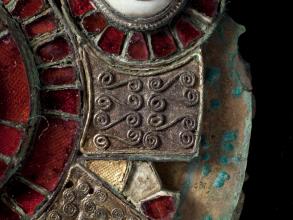
In the Medieval Archaeology stream you will benefit from the teaching and supervision of specialists who cover the periods from late antiquity to the 17th century.
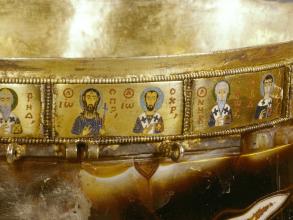
The stream focuses on the material remains of medieval Europe, including Britain, and the Byzantine World. You will engage with both established and new approaches to archaeological and other forms of evidence, including written sources and art, as well as with current debates regarding how such evidence should be interpreted.
Your taught modules and independent research will allow you to deepen your knowledge and understanding of the often dramatic social, religious, and political developments of the medieval world.
The small-group teaching and learning provides you with the opportunity to explore key sources of evidence and methodological and theoretical approaches in order to investigate and debate a wide range of subjects, such as:
- material culture
- settlements
- landscapes
- cultural contact
- trade and economy
- religion
- dress and adornment
- death and burial
The historic city and University provides a magnificent setting to study and research medieval archaeology. Students benefit from the world-renowned collections of the Bodleian Libraries, Ashmolean Museum of Art and Archaeology, and other resources. Some modules also include classes in the Ashmolean Museum, where students will have the opportunity to handle and study medieval material culture.
The University, and Oxford more broadly, has been at the forefront of medieval archaeology since the early 20th century, leading the development of the discipline and advancing our understanding of the medieval period. The School of Archaeology continues to be a world-leading centre for learning and research.
All MSc in Archaeology students take the mandatory Archaeological Principles: Data & Theory. You will also take two core modules offered within Medieval Archaeology: One List A taught in the first term, and the other from List B taught in the second term. The fourth module is your option module (also from List B), also taught in the second term; this is chosen from all available List B modules in any stream, or a module from the MSt in Classical Archaeology. In some circumstances a subject taught in the MSc in Archaeological Science may be taken as your option module, however this is taught over two terms.
Please note that the modules and streams listed on this website are indicative of the typical offerings and are subject to review each year. Whilst every effort is made to offer the full variety of modules/streams this is not possible to do every year. This is due to the fact that some modules/streams are dependent on student numbers to ensure an appropriate quality of education; timetable clashes; staff availability; etc. For enquiries, please email admissions@arch.ox.ac.uk.
This course examines the diverse societies of Europe from the end of the Western Empire in the fifth century to the Viking Age. It offers an overview of material culture change over a wide geographical region over a period of some 500 years, although the emphasis is on western and northern Europe, including Britain.
The objective of the course is to understand the social structure and economies of early medieval societies, the complex cultural interactions of in the period and the early stages of state formation. How did the influences of the late Roman Empire, the early Church, and the 'barbarian' Iron Age peoples of Europe together shape the culture, especially the material culture, of the early Middle Ages?
Although this is a period for which written sources are frequently scarce, it is essential to build up an historical framework from the reading lists provided.
The course is structured thematically and chronologically: the first two lectures provide an overview of ‘Eastern' and ‘Western' societies; Lectures 3-5 deal with social structure (as expressed in votive deposits and mortuary practices), and Lectures 6-8 with socio-economic development (the rural economy; the revival of towns and trade; the impact of the conversion to Christianity and of Viking incursions). The course also addresses the problems and potential of comparing written sources and material culture.
Convenor: Professor Helena Hamerow
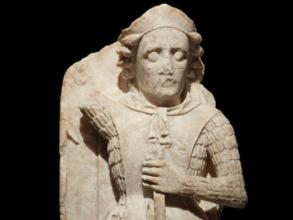
The option will focus on the period of c.AD 1100 – 1600 in Europe, with an emphasis on western and northern Europe, including Britain. Through the material remains we will investigate this period of dramatic economic, religious and social change, to develop our understanding of daily life and death for medieval populations. The module will cover the following topics: development of historical archaeology, medieval identities, economy, religion & belief, settlements & households, and material culture.
Convenor: Dr. Eleanor Standley