

MSc in Archaeological Science
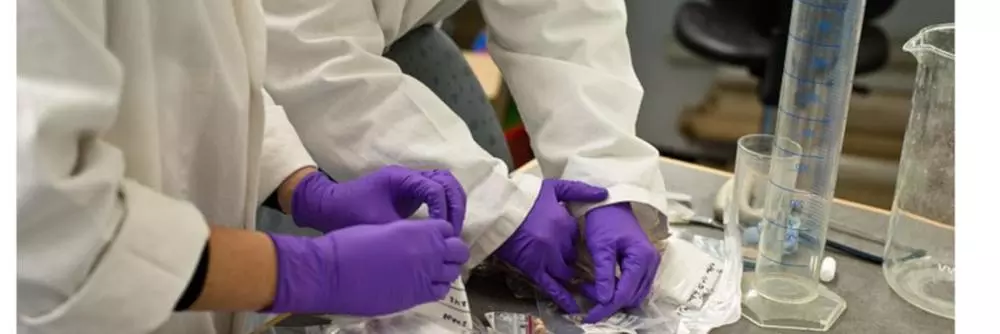
Msc Archaeological Science - an overview
The course provides a detailed grounding in the theory and practical experience across all the major applications of science in archaeology.
It is intended for those who wish to expand their knowledge and undertake research in archaeological science, or archaeologists who intend to pursue a career in the management of archaeological projects or become policy makers in this area and would like to have a sound understanding of the potential of science to elucidate archaeological problems.
This course will provide you with an understanding of the potential uses and limitations of scientific methods and how these methods help address questions about the human past. You will learn the methods in lectures and tutorials and then apply them in practical classes and research projects in our world-leading laboratories including the Research Laboratory for Archaeology and the History of Art. The course starts with a visit to Butser Ancient Farm where students tangibly explore how past people could have encountered and experienced material culture.
The MSc degree also provides key training for doctoral research.
Applicants may have either an archaeological or science degree, and it is advantageous to have some knowledge of both subjects.


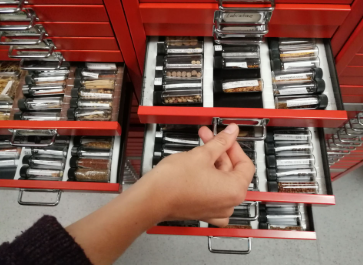


Archaeological Science Modules
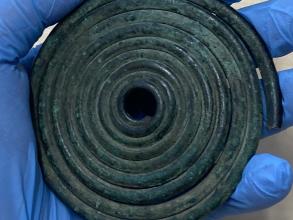
Spectacle Brooch from the Tylecote CollectionImage © Dr V.A. Sainsbury, from Tylecote Collection
This course explores the use of scientific analysis of archaeological artefacts to elucidate questions of archaeological interest. We will cover a broad introduction to the study of materials, and specifically materials in archaeological science. We will discuss the fundamentals of material structure for each of the major classes of materials exploited by people across the past (metals, stone, ceramics, glass, organics), the how, where and why of the sourcing of raw materials, as well as the complexity and variation of production processes. Through this, we will also cover the major techniques used in the analysis of archaeological materials, and their strengths and weaknesses, and their usefulness for different kinds of materials and question. At the heart of this course will be the why of analysis, and what it can bring to archaeology.
This course is taught through lectures, seminars and tutorials, as well as practical laboratory teaching and experimental archaeology.
Coordinator: Prof Shadreck Chirikure
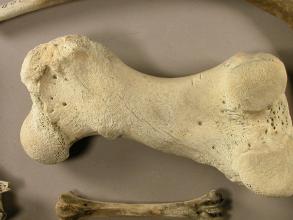
Scientific methods are playing an increasingly important role in archaeological research, and this is particularly true of organic materials. Developments in the analysis of stable isotopes, lipid residues, trace elements and ancient DNA are providing new lines of evidence for a host of central questions, including past subsistence and environmental change, migration and genetic origins. This course provides a detailed, critical overview of these topics, both in terms of the techniques themselves, and their archaeological applications. More traditional bioarchaeological analysis of human, faunal, and plant remains also feature.
The taught element of the course involves lectures and seminars that are complemented by interactive sessions involving the investigation of plant, animal and human remains as well as the generation and analysis of isotopic data. It makes use of the ongoing research of both members of staff and researchers to present the latest approaches.
Coordinator: Prof Greger Larson
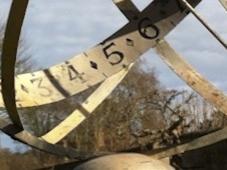
We need to be able to put past events onto a timescale if we are to understand them properly. Scientific dating allows us to explore the relationship between different sites and regions. Furthermore, chronologies built up from dating and other evidence enable us to understand processes at work in the archaeological record. This course looks at the scientific dating methods most commonly applied, including the practical aspects of radiocarbon, luminescence, tephrochronology and dendrochronology. It also provides an introduction to the use of statistical methods for combination of information from direct dating and other archaeological information. There is a strong emphasis on the critical evaluation of dating evidence.
Coordinator: Dr Rachel Wood
Structure and Assessment
Teaching, focused in Michaelmas and Hilary Terms, involves a combination of lectures, discussion seminars and laboratory sessions requiring regular written work, class presentations and is supplemented by a range of graduate seminars.
Summative assessments take the form of:
- A lab report with associated blog post and museum label
- A 5,000 word review article on a chosen topic
- Three 2-hour exams (One exam per module)
- A short oral presentation of dissertation research progress
- A dissertation of 15,000 words (max) submitted in early September
The degree is a very intensive course, and you will be expected to treat the University vacations as integral parts of your academic work time.
Examples of student research
Developing the use of supercritical fluids for the characterising Andean colourants and pretreatment of dyed textiles for radiocarbon dating.
An aDNA Analysis of Early "Domestic" Cats in Britain
A Combined Approach of ZooMS Faunal Identification and Stable Isotope Analysis to the Diet and Chronology of Palaeolithic Hominins at Vindija cave, Croatia.
A Framework for the Study of “Mercury Jars” and Other Stoneware from the Temasek Period of Singapore, alongside 12th-Century Stoneware from Kota Cina, Sumatra
The influence of seasonality on radiocarbon dates: investigating an offset with the calibration curve during the medieval period in England.
An investigation into climatic and Paleoenvironmental change across the Late Pleistocene to Early Holocene transition in Lesotho, Southern Africa, through the use of Stable Carbon and Oxygen isotopes.
Divine Provenance: An investigation into the procurement of obsidian during the Late Bronze Age and Early Iron Age at the site of Mtsvane Gora, eastern Georgia.
Exploring the potential use of the CERN Medipix 3 chip as a particle camera for dose rate measurements in luminescence dating
Sedimentological and geochemical soil analysis of Lazaret Cave to determine post-depositional effects on organic molecule preservation
Stable isotope analyses of oxygen-18 in bone collagen as a means of determining mobility during the Neolithic and Early Bronze Age at Baikal
Molecular clocks and domestication, using rabbits as a model organism.
Must the pot be destroyed? A comparison of approaches to organic residue extraction from ceramic fabrics