
Dr Alice Williams writes about the project team's packed July in Southern Africa
Yielding What Is Valuable
“Shelter what is precious, yield what is valuable, hide what is harmful,” Tim Maggs paraphrased at the ASAPA conference, drawing on one of my favourite books, Underland, by Robert Macfarlane.
How better to describe the lure of archaeology? Even today, we still hide what is harmful (waste), while sheltering and nurturing what is precious (anything we value).
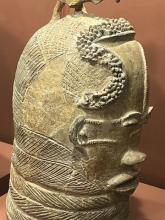
Researching the past often means looking for the things that were hidden either deliberately or accidentally. The Lydenburg masks come to mind. These sacred ceramic masks were made from inverted pots and decorated with features laden with symbolism, discussed by Simon Hall in fascinating detail at the same ASAPA conference. They were probably worn during rites of passage rituals that were very powerful and buried deliberately to keep them hidden. Why these masks were buried tells us something about what was seen as valuable or dangerous at the time.
But often we’re looking for the remains that were forgotten about or disposed of. As an archaeobotanist looking at plant remains, I’m usually trying to find the accidentally hidden remains of food that were thrown away. Much less symbolically powerful, but informative nonetheless! Food sustains and shapes a society (just think about coffee culture). Changes in the plant components of diet can therefore tell us something about how society was changing too, whether that’s from adopting new, exotic foodstuffs, or adapting subsistence systems to increasing population demands and changing climatic conditions. Burnt food can preserve for a surprisingly long time, even if buried deep underground. If I’m lucky, some of those remains will be plants that we can identify today and can tell us what people were cooking and consuming. The way to the past might just be through the stomach!
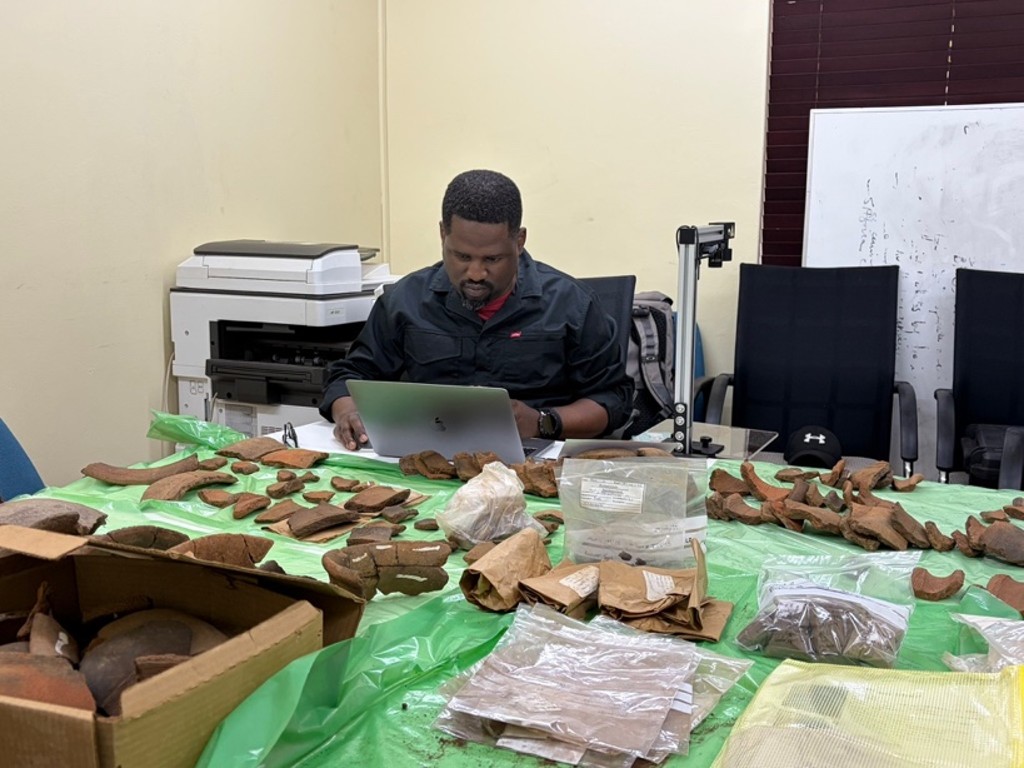
On our most recent project field trip to southern Africa, we spent two weeks digging through archaeological archives. Here, what is precious is sheltered at the Universities of Venda and Witwatersrand in South Africa. I was looking for plant remains from archaeological sites stored by archaeologists, while my colleagues Russell and Mica were looking for other disposed-of remains: broken pottery and animal bones. While not very precious at the time, these remains have become valuable for us on the New Bantu Mosaics (NBM) project.
Photographic record




We are looking for these forgotten remains to reconstruct what happened in southern Africa 2,000 years ago. Linguistic and genetic similarities point towards the southward movement of people across the continent from a common ancestral population in Central Africa, eventually reaching southern Africa around 2,000 years ago. Our task on the NBM project is to track down archaeological evidence for what this movement looked like on the ground. Did people move and bring their material culture and language with them? Did some ideas spread faster than people? What was left behind and why?
We’re covering all of southern Africa, ten countries and an area larger than Europe. This is a huge region for three postdocs and a professor to cover, so we’re building on existing work as much as we can. This is how we ended up in the archives, sifting through boxes of material, some of which was excavated several decades ago, with all of the layers of dust to prove it. Working with archival material is its own peculiar type of archaeology. When we’re underground in windowless rooms searching for the box that might have the material we need, it can feel even more mysterious and secretive than working in the open air on an excavation. We found boxes upon boxes of pottery sherds, but very few soil samples from which we could recover plant remains.
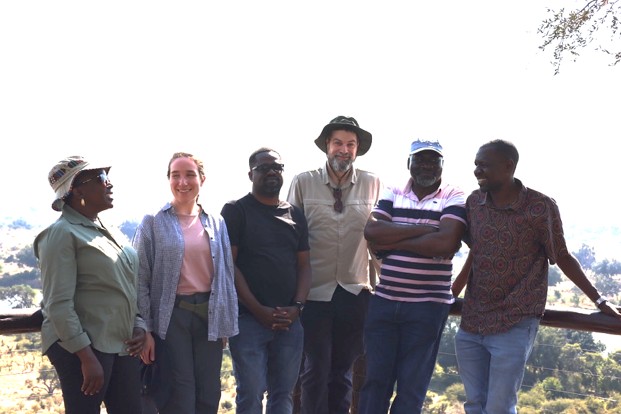
Yielding what is valuable has another dimension when attending conferences. Our fieldwork was bookended by two significant African archaeology conferences, my first time attending both, and my first time meeting many of the names behind the papers I’ve been reading. We all presented at the ASAPA conference (Association of Southern African Professional Archaeologists), held at the University of Mpumalanga at Mbombela in northeastern South Africa at the start of the month. Prof Shadreck made waves at his keynote talk, calling for archaeologists to ensure we’re seen as relevant in a rapidly transforming modern world. I was fortunate enough to present my work on existing archaeobotanical data from southern Africa as part of the very popular, and first-ever, ‘First farmers’ session. But the real work starts when the talks finish. Small talk over tea leading to bigger talk about research is where conferences really yield their value. We all made connections that will help us enormously with the next stages of the project to cover even more of the vast region.
The final chapter of our field trip was the PanAf conference (PanAfrican Archaeological Association), held in Maputo in southern Mozambique. Attendees presented their research from all over Africa. The NBM team hosted the session: ‘Mobility, technology, and food systems in Early Iron Age southern Africa’, which sparked interesting discussions among participants that we hope to continue in future. The other sessions I attended showcased such diversity of work, I was both inspired and a little overwhelmed! Everything was discussed, ranging from reinterpretations of Palaeolithic archaeology hundreds of thousands of years ago, to the ethics of using AI in archaeology. One highlight for me was listening to Kathryn de Luna speak about ‘glittery’ ceramics. She used linguistic analysis combined with archaeological finds to argue that for a while, people deliberately made their pots as sparkly as possible. Value was painted on for all to admire!
After a month away, we came back with our heads and camera rolls full of new knowledge and questions, and with productive new connections with others working in the region. We certainly did our best to ‘yield what is valuable’ on this trip, and I’m keen to make the most of my new understanding of this fascinating area of the world!