

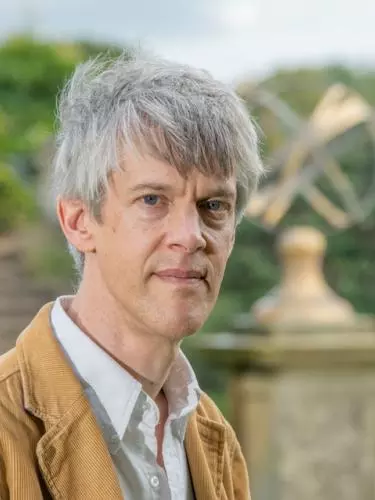
Professor Christopher Bronk Ramsey
Radiocarbon dating in Archaeology
As the former-director of the Oxford Radiocarbon Accelerator Unit, he was been involved in many different archaeological projects. These projects include those led from Oxford, and those that were collaborative with scholars elsewhere. His primary focus in recent years was been in the archaeology of the eastern Mediterranean (Aegean, Egypt and the Levant), in the Palaeolithic period (with Tom Higham), Anglo-Saxon England (with Helena Hamerow and the FeedSax team) and Amazonia (with Frank Mayle and the HERC team). His current focus in on the issues of chronology building for archaeological projects).
Quaternary chronology and Environmental Science
Radiocarbon dating (0-50ka) provides one of the main ways for dating the later Quaternary (0-2.5Ma) and in particular the dating of modern human expansion into Europe, Neanderthal extinction and faunal/human responses to the climate variability during the last glacial cycle. Much of his current research is directed to improving radiocarbon as a method for quaternary research. He is the chair of the international INTCAL committee that oversees the calibration of radiocarbon.
The use of numerical modeling methods in chronology
Over the last 20 years he has worked extensively on the application of Bayesian statistical methods to the study of chronology in both Archaeology and Quaternary environmental research. He has formulated a systematic approach to approaching chronological research, which is embedded in the widely used software package OxCal.
Development of Nuclear Instruments and Methods
Trained as a physicist, much of his early-career research was in the development of Accelerator Mass Spectrometry (AMS) techniques including the development of gas ion sources for AMS which allows the measurement of very small samples and a technique, GC-AMS with applications in the environmental and biological sciences. More recently he has been most concerned with the development of high-precision techniques and their applications to archaeological and environmental problems.
Links
Key words: chronology, digital archaeology, human evolution, resilience, policy, radiocarbon calibration, climate change, earlier prehistory, later prehistory, medieval, quaternary, Europe, Americas, E Asia, Egypt, Japan