
Social Organisation and Political Authority in Early China
Lead: Guohua Yang
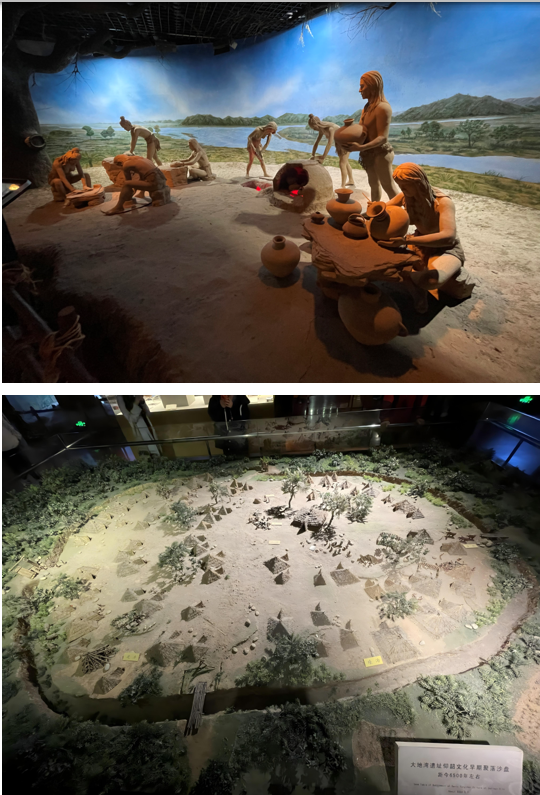
This project investigates the transformation of central settlements into political capitals and early states through a comparative study of Xiaoshan (also known as Zhudingyuan) Ancient Kingdom, Heluo Ancient Kingdom, Nanzuo (also known as Longdong) Ancient Kingdom, Liangzhu, Taosi, Shimao and Erlitou. Integrating settlement archaeology, spatial analysis, chronology and social anthropology, it examines settlement hierarchies, urban planning, palatial architecture, ritual landscapes, social differentiation and regional interaction. Particular attention is given to the mechanisms through which urban centres acquired political, administrative and ceremonial functions, and how spatial organisation and ritual institutions contributed to the emergence and institutionalisation of authority. By comparing regional variations in political organisation, resource control and social integration, the research explores the complex relationships between urbanisation, social complexity and early state formation. Moving beyond single-centre and linear evolutionary models, it seeks to identify both shared processes and distinctive pathways of political development, offering new perspectives on the diverse social foundations, institutional transformations and historical dynamics underlying the emergence and integration of early Chinese civilisation.